One-Way vs Two-Way Switches: What Is the Difference?
Understand where each switch is used and why gang and way are not the same thing.
Quick answer#
A one-way switch controls a light or circuit from one location.
A two-way switching arrangement allows the same light or circuit to be controlled from two different locations.
Typical examples:
- One-way: a bathroom light controlled beside the door
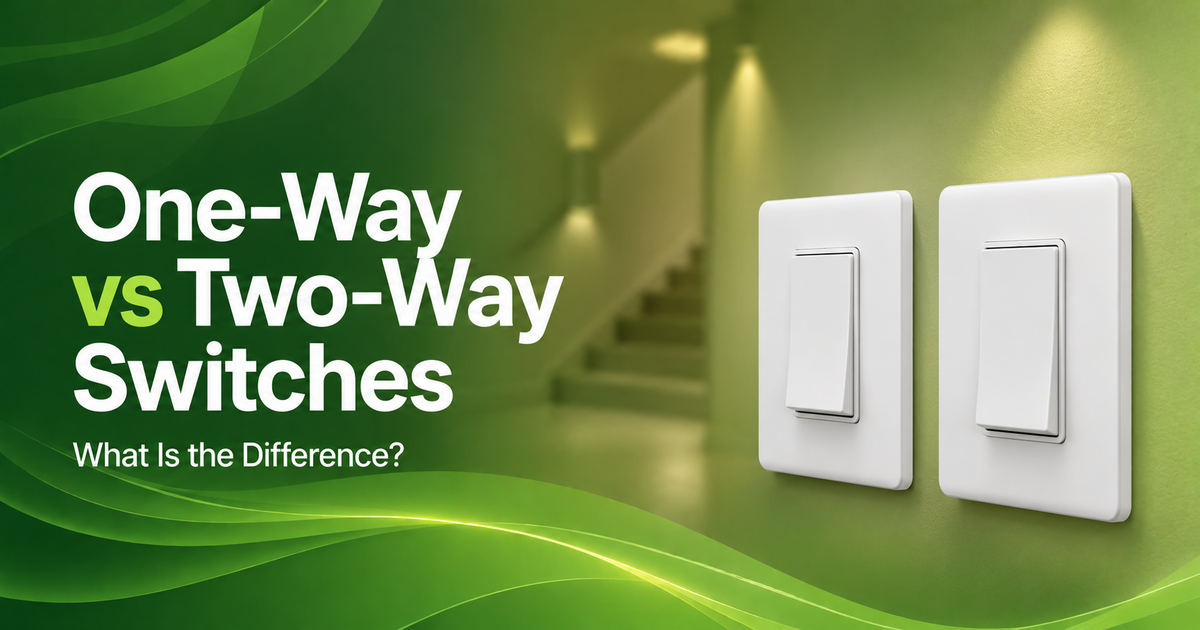
- Two-way: a staircase light controlled from both the ground floor and upper floor
The terms describe the control arrangement. They do not describe the number of buttons on the faceplate.
What is a one-way switch?#
A one-way switch is the simplest common lighting control. It makes or breaks the live connection to a light from a single point.
Use it when:
- The room has one practical entrance
- The light needs only one control position
- No second switching location is required
- The circuit design is simple and fixed
Common applications include small bedrooms, bathrooms, storage rooms, balconies and individual utility spaces.
A one-way switch typically has a simple on/off action. The exact terminal markings depend on the product, so installation should follow the manufacturer's information.
What is a two-way switch?#
A two-way switch is designed to work with another compatible switch so the same light can be controlled from two locations.
A conventional arrangement normally uses:
- A common terminal
- Two switched or traveller terminals
- A second two-way switch
- Correct interconnecting conductors
Operating either switch changes the available current path, so the light can be turned on or off from either location regardless of the position of the other switch.
Where are two-way switches useful?#
Staircases#
Place one switch at the bottom and another at the top. This allows users to turn the light on before entering the stairs and turn it off after reaching the other level.
Corridors#
A switch at each end prevents someone from walking through a dark passage to reach the only control.
Bedrooms#
One control can be installed near the entrance and another near the bed, depending on the room design.
Rooms with two entrances#
A two-way arrangement allows the same light to be controlled from either doorway.
Large halls or open spaces#
Two control points can improve convenience when people regularly approach from different directions.
One-way vs two-way: key differences#
| Feature | One-way switch | Two-way switch |
|---|---|---|
| Control locations | One | Two |
| Common use | Small room with one entrance | Stairs, corridors or two-entrance rooms |
| Conventional mechanisms required | One | Two |
| Interconnecting wiring | Simple switched line | Additional traveller conductors |
| Installation complexity | Lower | Higher |
| Can control one light? | Yes | Yes, from two points when correctly paired |
The circuit must be planned before walls are finished because a conventional two-way arrangement requires suitable wiring between the switch locations.
Gang and way are different#
These terms are often confused.
Gang describes how many separate switch controls are fitted on one faceplate.
- 1 gang: one control
- 2 gang: two controls
- 3 gang: three controls
- 4 gang: four controls
Way describes the switching function.
- 1 way: controlled from one location
- 2 way: designed for control from two locations when paired correctly
This means a product can be:
- 1 gang 1 way
- 1 gang 2 way
- 2 gang 1 way
- 2 gang 2 way
A 2 gang 1 way switch controls two separate circuits from one location. It does not automatically control one light from two places.
Can a two-way switch work as a one-way switch?#
Many conventional two-way switches can be connected for one-way operation by using the appropriate terminals. However, this should not be assumed for every mechanism, modular system or smart-control product.
Always verify:
- Terminal markings
- Product instructions
- Voltage and current rating
- Compatibility with the load
- Whether the device contains electronics
- Whether a neutral conductor is required
A qualified electrician should make the connection and test the circuit.
What about controlling a light from three or more places?#
A conventional three-location circuit normally requires two two-way switches and an intermediate switch between them. Additional intermediate switches can provide more control points.
Smart or wireless systems can offer other arrangements, but they may require compatible devices, a neutral conductor, a hub or specific wiring.
Do not attempt to create additional control points by randomly joining traveller wires or mixing incompatible products.
Load compatibility matters#
The switch must be suitable for the connected load. LED drivers, fans, motors and electronic equipment may behave differently from simple resistive loads.
Check:
- Rated voltage
- Rated current
- Load type
- Inrush current where relevant
- Dimmer compatibility
- Number of fittings on the circuit
- Manufacturer instructions
A switch should not be selected only by its current rating or appearance.
Installation and safety#
Before any switch is opened or replaced, the circuit must be isolated and verified dead using suitable procedures and test equipment.
Incorrect wiring can cause:
- Electric shock
- Short circuit
- Persistent live conductors
- Damage to LED drivers
- Unexpected operation
- Overheating
- Loss of protective continuity
Colour alone should not be trusted to identify conductors, particularly in older or modified installations.
Selecting an AKIJ one-way or two-way switch#
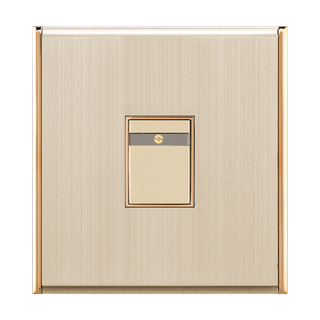
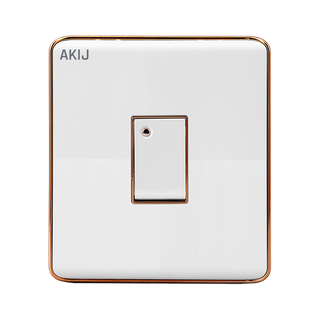
AKIJ Electricals offers one-way and two-way switches across multiple switch series. Product names identify the gang and way arrangement, while published product pages provide model-specific colour, material, voltage, current, dimensions and operating-cycle information where available.
Explore AKIJ Switch & Socket products
For example, the AKIJ Aura range includes published 1 Gang 1 Way and 1 Gang 2 Way options. Choose the mechanism according to the planned control locations, then confirm the rating, series compatibility and installation requirements of the exact model.
Planning note: Decide control points before running cables or closing walls. A conventional two-way circuit requires suitable interconnecting wiring and professional testing.
Common mistakes to avoid#
- Confusing 2 gang with 2 way
- Buying one two-way switch when the circuit requires a compatible pair
- Reusing unsuitable existing wiring
- Mixing unmatched modular mechanisms and plates
- Assuming all smart switches use conventional two-way wiring
- Connecting a dimmer as though it were a standard switch
- Exceeding the switch's rated load
- Performing live electrical work
- Copying an online wiring diagram without verifying the actual installation
Conclusion#
Choose a one-way switch when a light needs one control point. Choose a two-way arrangement when the same light must be controlled from two locations.
Plan the circuit early, understand the difference between gang and way, use compatible products and have the wiring installed and tested by a qualified electrician.
Frequently asked questions
- Can one light be controlled from two places?
- Yes. A conventional two-way switching circuit uses compatible two-way switches and correctly installed traveller wiring so the same light can be controlled from either location.
- Is a two-gang switch the same as a two-way switch?
- No. Gang refers to the number of controls on one faceplate, while way refers to the switching function. A two-gang plate can contain one-way or two-way mechanisms.
- Can a two-way switch be used as a one-way switch?
- In many conventional designs it can be connected for one-way operation, but terminal arrangements vary. A qualified electrician should confirm the product and wiring.
- Where are two-way switches commonly installed?
- They are commonly used at both ends of a staircase or corridor, at two entrances to a room, or at a bedroom entrance and bedside location.