3000K vs 4000K vs 6500K: Which LED Colour Is Best?
Choose warm, neutral or daylight-coloured LED lighting for each room and activity.
What do 3000K, 4000K and 6500K mean?#
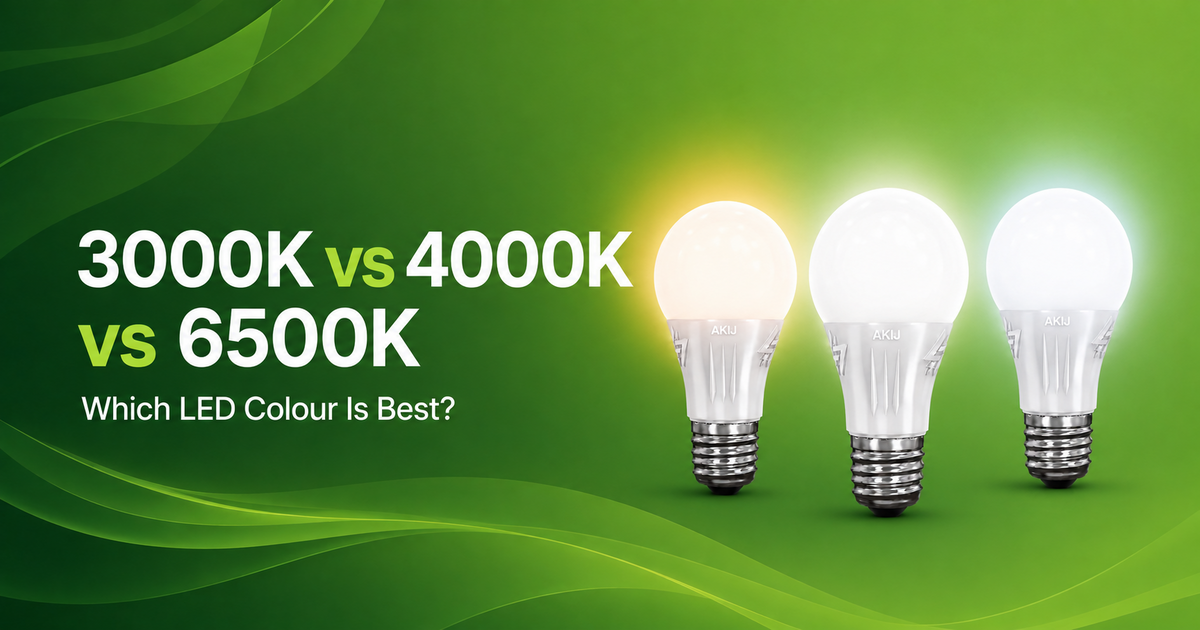
The K value printed on an LED package refers to correlated colour temperature, measured in kelvin. It describes whether white light appears warm, neutral or cool.
- 3000K: Warm white with a soft yellowish tone
- 4000K: Neutral white with a balanced appearance
- 6500K: Cool daylight with a crisp bluish-white appearance
Colour temperature does not tell you how much light a product produces or how much electricity it uses. Lumens measure brightness, while watts measure power consumption.
Quick comparison#
| Colour temperature | Appearance | Commonly suitable for |
|---|---|---|
| 3000K | Warm, soft and comfortable | Bedrooms, living rooms, dining spaces, hospitality areas |
| 4000K | Neutral, clean and balanced | Kitchens, bathrooms, offices, shops and mixed-use spaces |
| 6500K | Cool, crisp daylight | Task areas, utility rooms, workshops, some commercial spaces |
These are practical starting points, not fixed rules. Interior colours, daylight, room purpose and personal preference all influence the final choice.
Understanding the colour-temperature scale#
A lower colour-temperature number appears warmer. A higher number appears cooler.
This can feel counter-intuitive because 3000K looks visually warm while 6500K looks cool. The terms describe the appearance of the light, not the physical heat produced by the lamp.
3000K: warm white#
Around 3000K, white light has a warm yellowish character. It can make timber, cream, beige, brown and warm-coloured interiors feel comfortable and welcoming.
It is often selected for:
- Bedrooms
- Living rooms
- Dining rooms
- Restaurants and lounges
- Reception or hospitality spaces
- Decorative wall and ceiling lighting
Warm white is useful when relaxation and atmosphere matter more than a very crisp visual impression.
4000K: neutral white#
Around 4000K, the light appears more neutral, with less yellow than 3000K and less blue than 6500K. It can provide a clean, balanced look without feeling extremely cool.
It is commonly considered for:
- Kitchens
- Bathrooms
- Home offices
- Corridors and stairways
- Retail shops
- General office areas
- Clinics and service counters, depending on project requirements
Neutral white is a versatile choice when a room serves both practical and social purposes.
6500K: cool daylight#
Around 6500K, white light appears cool and crisp. It can create a strong sense of clarity and contrast, particularly in functional spaces.
It may suit:
- Workshops
- Utility rooms
- Garages
- Detailed task areas
- Warehouses and some commercial spaces
- Locations where a cool daylight appearance is preferred
Because it has a cooler visual tone, 6500K may feel less relaxing in bedrooms or lounges, especially during evening use.
Which colour temperature is suitable for each room?#
Bedroom#
A warm 3000K appearance is a common starting point because it supports a softer evening atmosphere. Use focused bedside or reading lights where additional task illumination is required.
Living room#
For a relaxed family space, 3000K usually works well. A contemporary living room may also use 4000K, especially when the interior has white, grey or neutral finishes.
Dining room#
Warm white can make the environment feel more inviting. Consider how the light affects food presentation, wall colours and decorative finishes.
Kitchen#
A neutral 4000K appearance often balances comfort and task visibility. Stronger task lighting may be added above counters, sinks and preparation areas.
Bathroom#
Neutral white is commonly chosen for general lighting. Mirror lighting should be positioned to reduce facial shadows and should provide good colour quality.
Study or home office#
Many users prefer 4000K for a clean, alert working environment. Some may choose cooler light for detailed work, but glare control and sufficient illumination are more important than colour temperature alone.
Shop or showroom#
The right choice depends on the product being displayed. Warm white can complement wood, fashion and hospitality environments, while neutral or cool light can support technical, appliance or high-contrast displays. Colour rendering should also be checked.
Outdoor and security areas#
Cool daylight is widely used where a crisp, functional appearance is desired. The luminaire must also have a suitable outdoor IP rating and be installed correctly.
Colour temperature is not brightness#
A 6500K lamp is not automatically brighter than a 3000K lamp. Perceived brightness can differ because cooler light may appear sharper to some viewers, but the correct comparison is the lumen rating.
When choosing an LED, check:
- Lumen output
- Wattage
- Colour temperature
- Colour rendering
- Beam angle
- Fixture position
- Glare control
- Rated voltage and base type
- Lifespan and warranty
- IP rating for damp or outdoor locations
Why colour rendering also matters#
Colour temperature describes the shade of white light. Colour rendering describes how naturally colours appear under that light.
Two 4000K products can make objects look different if their colour-rendering performance is not the same. In shops, kitchens, dressing areas, studios and other colour-sensitive environments, review both colour temperature and colour quality.
Can you mix 3000K, 4000K and 6500K?#
Mixing can work when each layer has a clear purpose. For example, a room may use warm ambient lighting with neutral task lighting on a work surface.
Randomly mixing different colour temperatures in the same ceiling can look inconsistent. For a clean design:
- Keep the main ambient lights at one colour temperature.
- Use a different temperature only for a distinct task or accent.
- Check how the lights look together before completing a large installation.
- Keep matching fixtures consistent within the same visual zone.
Choosing from the AKIJ LED range#
AKIJ Electricals offers LED bulbs, downlights, panel lights, tubes, spotlights, floodlights and other lighting products across different wattages and colour options. Review the colour information shown on each product page and select the form factor according to the room and fixture.
Explore AKIJ LED Light products
For warm and comfortable areas, review products listed as Warm White where available. For a cooler daylight appearance, review products listed as Daylight. Availability varies by product range and model.
Selection note: Do not choose colour temperature in isolation. Confirm brightness, beam distribution, fixture type, voltage, base, lifespan and installation conditions before purchase.
Common mistakes to avoid#
- Assuming a higher K value means greater brightness
- Mixing several colour temperatures randomly in one ceiling
- Using very cool light in every room
- Ignoring wall colours and natural daylight
- Choosing by appearance without checking lumens
- Using unsuitable indoor fittings in wet or outdoor locations
- Expecting colour temperature alone to improve task visibility
- Ignoring glare, shadows and fixture placement
Conclusion#
Choose colour temperature according to how the room should feel and function:
- Select 3000K for a warm, relaxing atmosphere.
- Select 4000K for a balanced, neutral appearance.
- Select 6500K for a crisp, cool daylight look in functional spaces.
Then confirm lumens, wattage, colour quality, beam angle and installation requirements. Viewing a sample in the actual space is the best way to judge the final result.
Frequently asked questions
- Is 3000K brighter than 6500K?
- Not necessarily. Colour temperature describes the appearance of white light, while lumens measure brightness. Two lamps can have different colour temperatures but similar lumen output.
- Which colour temperature is best for a bedroom?
- Many people prefer warm white around 3000K because it creates a softer, more relaxing atmosphere. The final choice should also consider décor, personal preference and the room's activities.
- Is 6500K suitable for a living room?
- It can be used, but its cool daylight appearance may feel clinical in a relaxation-focused living room. Warm or neutral white is often more comfortable for general evening use.
- Can I mix colour temperatures in one room?
- Yes, when done deliberately. Keep the main ambient lighting consistent and use a different colour temperature for a clearly defined task or accent zone.