
Which LED Bulb Wattage Is Suitable for Each Room?
A practical room-by-room guide to brightness, wattage and comfortable lighting.
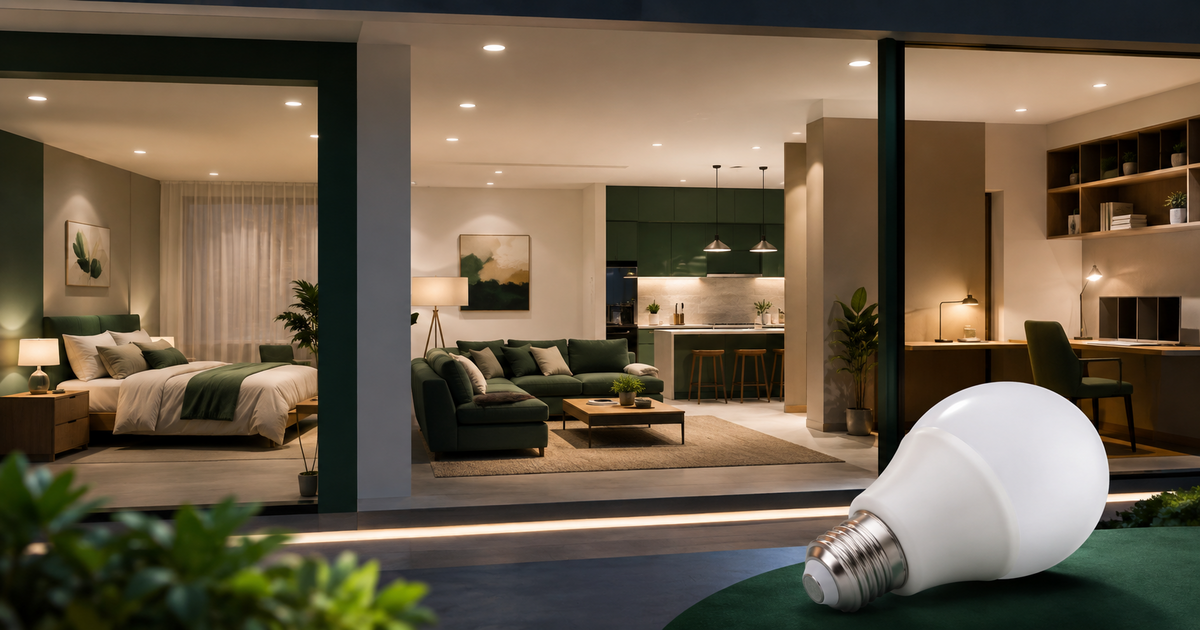
Start with brightness, not wattage#
Many people still choose a light by asking, “How many watts do I need?” Wattage is important, but it measures electrical power consumption—not brightness. Brightness is measured in lumens.
With older incandescent bulbs, higher wattage usually meant more light. LEDs are more efficient, and two LED bulbs with the same wattage can produce different lumen outputs. A sensible selection method is:
- Decide how the room will be used.
- Estimate the amount of light the room needs.
- Compare available lumen output.
- Check wattage, colour temperature, beam distribution and product quality.
The recommendations below are practical starting points, not fixed rules. Room size, ceiling height, daylight, wall colour, fixture design and personal comfort can change the final requirement.
Quick room-by-room starting guide#
| Room or area | Typical lighting need | Practical LED starting point |
|---|---|---|
| Bedroom | Comfortable general light | One moderate-output bulb or several lower-output lights |
| Living room | Flexible ambient light | Several balanced light sources instead of one harsh central light |
| Dining area | Comfortable light over the table | Moderate general light with a focused pendant or downlight if suitable |
| Kitchen | Strong general and task light | Higher total brightness plus task lighting over counters |
| Bathroom | Clear visibility | Bright, even lighting with a suitable IP rating for the installation zone |
| Study area | Focused task light | General room light plus a desk or task light |
| Corridor or stairs | Safe movement | Lower to moderate brightness with good coverage and minimal glare |
| Shop or workspace | Sustained visibility | A planned combination of general and task lighting |
The right answer may be one higher-output lamp, several lower-output lamps, or a combination of general and task lighting. Total room brightness and distribution matter more than a single wattage number.
Bedroom lighting#
A bedroom should feel calm while still providing enough light for dressing, cleaning and movement. Extremely bright central light can feel uncomfortable, especially at night.
For a small bedroom, a moderate-output LED bulb may be sufficient. A larger bedroom can benefit from a central light supported by bedside lamps or wall lights. Warm white light is often comfortable for relaxation, while neutral white may be preferred where clearer visibility is important.
Living room lighting#
Living rooms support several activities: conversation, television, reading, entertaining and relaxation. One powerful bulb in the centre can create glare and dark corners.
A better approach is layered lighting:
- General ceiling lighting for movement and everyday use
- A floor or table lamp near reading seats
- Accent lighting for artwork or display areas
- Dimmable lighting where compatible products and controls are available
Choose total brightness according to room size, then distribute it through appropriate fixtures.
Kitchen lighting#
Kitchens usually need more useful light than bedrooms because food preparation requires clear visibility. A bright ceiling light alone may still leave shadows on the counter when a person stands between the light and the work surface.
Combine broad general lighting with focused task lighting over preparation areas. Check that fixtures are suitable for the location, can dissipate heat correctly and are positioned away from excessive moisture or grease unless designed for that condition.
Bathroom lighting#
Bathroom lighting must balance visibility with electrical safety. Bright, even light can support grooming and cleaning, but the fixture’s suitability for damp or splash-prone areas is more important than wattage alone.
Check the product’s declared IP rating and the installation location. A qualified electrical professional should select and install bathroom electrical products according to applicable requirements.
Study and home-office lighting#
A study area needs enough light on the desk without creating screen glare or harsh shadows. Use comfortable general lighting and add a task light where necessary. Place the task light so the hand and body do not cast a strong shadow over the work.
Neutral white light can support an alert working environment, but colour temperature is a preference and application decision rather than a measurement of brightness.
Factors that can change the required wattage#
- Room size: Larger spaces generally need more total lumens.
- Ceiling height: A high ceiling may reduce useful light on the working surface.
- Dark surfaces: Dark walls, floors and furniture absorb more light.
- Daylight: Rooms with good windows may need less artificial light during the day.
- Beam angle: A narrow beam concentrates light; a wide beam distributes it.
- Fixture cover: Shades and diffusers can reduce or redirect useful light.
- Age and comfort: Some users prefer stronger illumination for reading and detailed work.
How to compare AKIJ LED options#
AKIJ Electricals offers different LED solutions for general, focused and decorative lighting applications. Compare the product type, wattage, available lumen information, colour temperature, base or installation type, dimensions and warranty before choosing.
Explore the AKIJ LED Light range
Also read Lumen vs Watt: How to Choose the Right LED Light and 3000K vs 4000K vs 6500K: Which LED Colour Is Best?.
Common mistakes to avoid#
- Treating wattage as a direct brightness measurement
- Buying the highest wattage without checking room size
- Relying on one central light for every activity
- Ignoring glare, shadows and beam distribution
- Using indoor-only products in damp or outdoor areas
- Installing an LED in a fixture that traps excessive heat
- Ignoring holder, voltage, dimension or dimmer compatibility
Conclusion#
Choose LED lighting by considering brightness, room use and distribution first, then compare wattage and other product details. Use room-by-room recommendations as a starting point and adjust for the real space. For large, commercial or specialised areas, obtain a proper lighting calculation.
Reference: ENERGY STAR — Learn About Brightness